
There’s a moment in almost every leadership offsite where a team talks itself in circles about collaboration. Everyone agrees it matters. Everyone commits to being more open. Nothing much changes after the coffee break. If that pattern sounds familiar, the reason probably isn’t motivation. It’s the invisible assumptions running underneath the conversation.
That’s the problem The B❒X by InnoGreat was built to address.
What The B❒X actually is
The B❒X is an experiential tool created by Jimbo Clark, founder of InnoGreat, a consulting firm focused on creativity and innovation in decision-making. It’s not a deck of cards, a questionnaire, or a slideshow. It’s a physical box, literally, used inside a structured facilitated experience that makes invisible thinking patterns visible, unconscious assumptions conscious, and the seemingly impossible actionable. That description comes almost verbatim from InnoGreat’s own team, and the tool earns the promise.
The methodology has been delivered in more than 30 countries and 18 languages, which tells you something about how well it travels across culture, hierarchy, and language barriers. That portability matters in Singapore and the wider ASEAN region, where teams are almost always cross-cultural by default.
How It Works in The Room
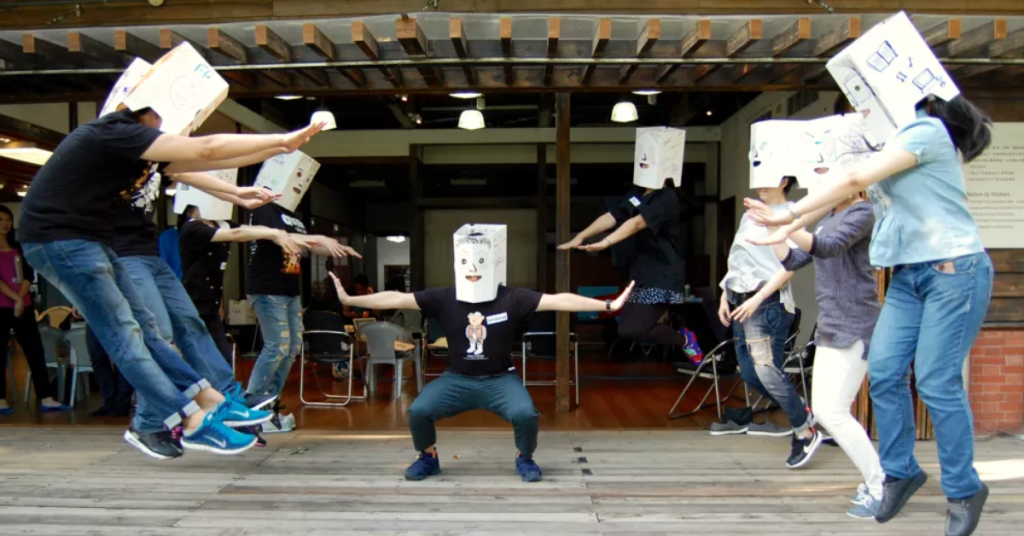
A typical B❒X session puts a group through a structured challenge that requires them to work with incomplete information, negotiate meaning, and align on a shared outcome. While they’re doing the task, their thinking patterns and team behaviours become visible in real time. Who jumps to conclusions. Who goes silent. Who leads. Who resists. How ambiguity gets handled, or avoided. The box itself becomes the metaphor, with each side representing a filter or limit that people bring into decision-making.
What the facilitator does next is where the value compounds. Rather than telling a team what they did wrong, the B❒X surfaces what they did and lets the group name and own the pattern themselves. That shift from advice to awareness is usually what unlocks behaviour change that actually sticks back on the job.
Why This Lands in Singapore HR Contexts
A few threads make the B❒X especially relevant right now for Singapore organisations.
First, the local workforce is navigating a concentrated stretch of transformation. Restructures, digitalisation pushes, AI integration, cross-border matrix structures, all happening at once in many companies. The unspoken assumptions about how work gets done are under pressure, and most traditional change programmes don’t have a vocabulary for naming those assumptions out loud.
Second, psychological safety has moved from a nice-to-have into a board-level metric across several Singaporean statutory boards and multinationals. The B❒X creates a space where surfacing a limiting assumption feels safe because it’s the point of the exercise, not a side effect.
Third, cross-functional collaboration is a persistent ask, and most collaboration training stays abstract. The B❒X forces collaboration into a tangible form that people can point at afterwards, which is useful when reinforcing the learning back in the business.
About Jimbo Clark and InnoGreat
Credibility is fair to check before inviting anyone into your organisation’s change work. Jimbo Clark is a certified simulation designer and a former board member of the North American Simulations and Games Association. He has delivered programmes for organisations including Nike and New York Life, presented keynotes from the Philippine Society of Training and Development to HR Director conferences in Hong Kong and Beijing, and works in both English and Chinese. His firm InnoGreat, founded in 2009, maintains the global B❒X facilitator network and handles certification through box.innogreat.com.
When Certification is Worth Considering
Some organisations run one B❒X workshop, get what they need, and move on. Others realise partway through that they want the capability in-house, especially if they plan to cascade mindset work across multiple teams, regions, or leadership cohorts. Only licensed B❒X Facilitators can deliver B❒X-based programmes, and certification is the route for building that internal capacity. It’s worth considering when three or more facilitated sessions are on the horizon, when the tool needs to sit inside the organisation’s leadership development curriculum, or when an internal L&D lead is ready to take on facilitator craft as part of their role.
A Sensible Next Step
The easiest way to evaluate whether The B❒X fits your organisation is to experience it firsthand. Workplace Asia runs the workshop in Singapore with Jimbo Clark as co-facilitator and can advise on the certification pathway for teams and individuals who decide it’s the right fit. Details on the upcoming cohort are in the button below.
If you’ve been looking for something that moves people past the circular collaboration conversation, this one is worth a closer look.
Fascinating concept The B❒X turning invisible assumptions into visible patterns feels like a powerful way to unlock genuine collaboration, especially in cross-cultural teams.